


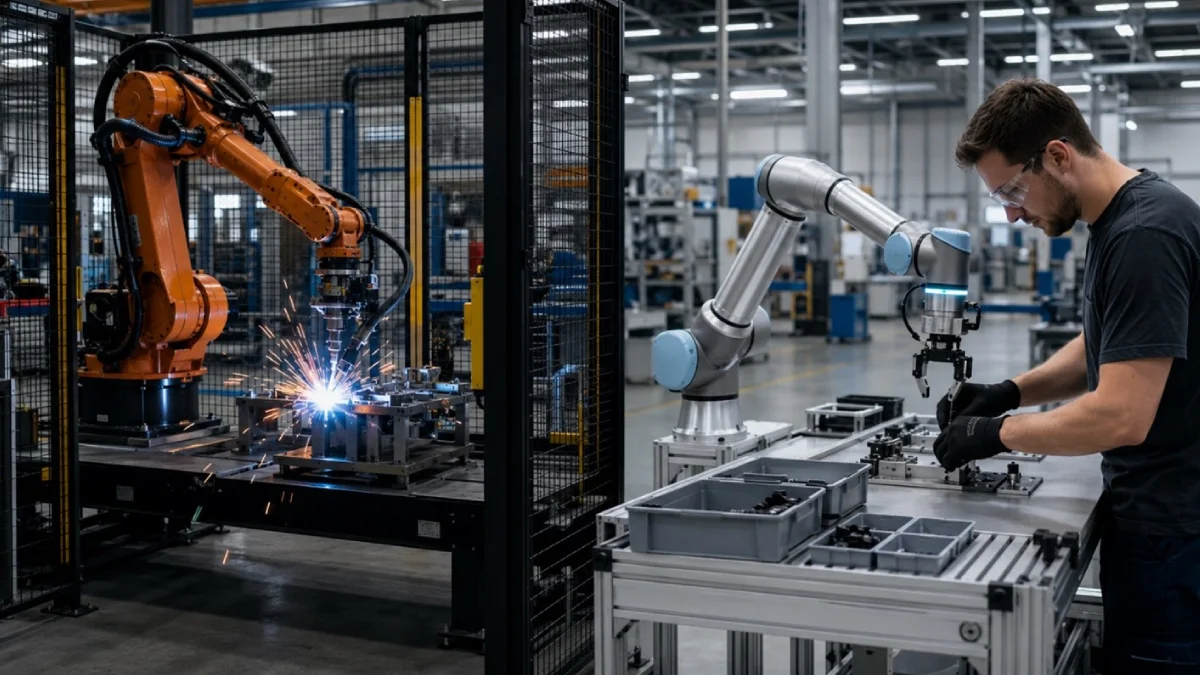
Today, automation and robotic solutions have become essential for maintaining operational stability, increasing production speed, and enhancing quality on production lines.
When it comes to selecting the right automation system, businesses typically face two main options: traditional industrial robots and collaborative robots, also known as Cobots.
In this article, we provide a detailed comparison of their features, applications, advantages, and disadvantages to help you make the best and most informed decision for your workshop or factory.
What Is an Industrial Robot?
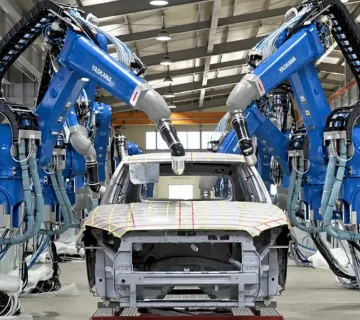
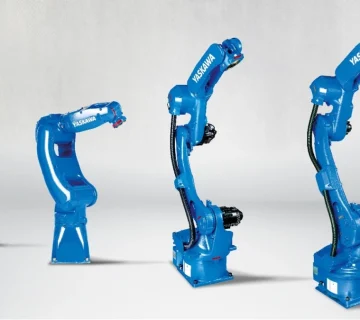
Industrial robots are automated, programmable machines designed to perform specific, repetitive, and heavy-duty tasks with exceptional speed and precision. These robots are typically installed in a fixed workstation or robotic cell and maintain consistent quality over time without any decline in performance.
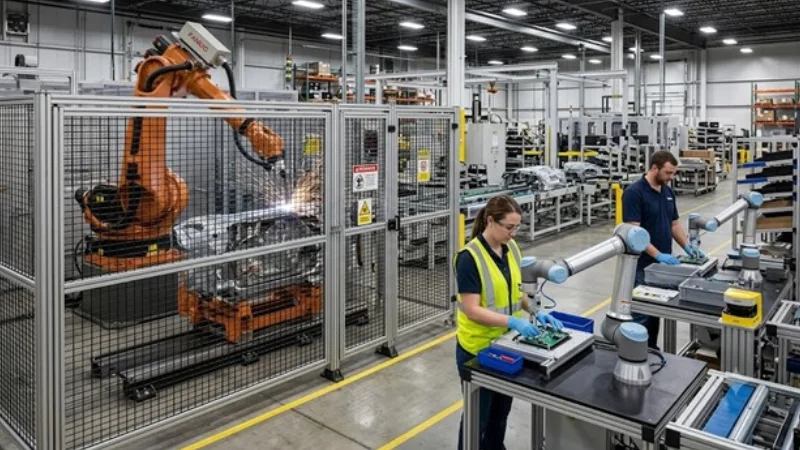
Key applications of industrial robots include:
– Industrial Welding: Precise joining of metal components in heavy industries, steel structure construction, and automotive manufacturing to achieve strong and reliable joints.
– Component Assembly: Assembly of delicate or heavy parts in the electronics, home appliance, and automotive component industries.
– Automated Painting: Uniform application of paint and protective coatings on various surfaces to enhance appearance, consistency, and durability.
– Material Handling: Fast transfer, palletizing, and efficient organization of raw materials and finished products in warehouses and logistics operations.
If you are planning to purchase industrial robots, design robotic cells, or set up palletizing robots, welding robots, and complex automation lines for your factory, contact the TS Group experts for a free consultation.
What Is a Collaborative Robot or Cobot?
Collaborative robots, commonly known as cobots, represent a newer generation of robotic systems. While they perform many of the same tasks as traditional industrial robots, they feature a smaller footprint, lower weight, and significantly greater flexibility.
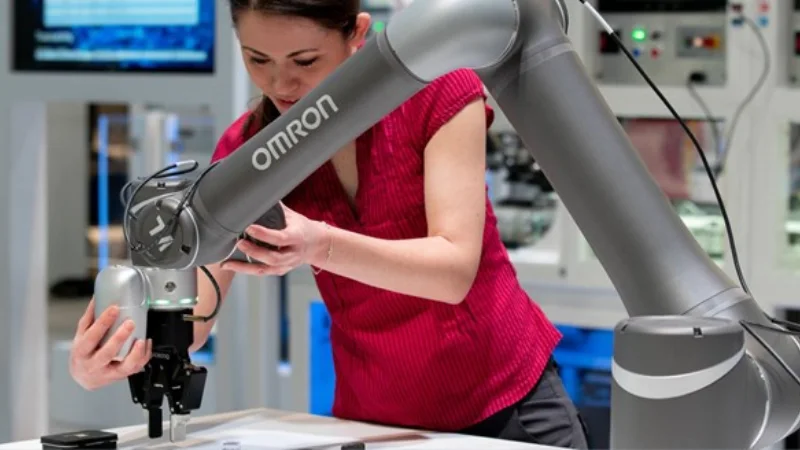
One of the main advantages of cobots is their ability to work directly alongside human operators, often without the need for complex and expensive safety fencing or barriers. These robots are equipped with advanced built-in sensors and force and torque control systems. Upon detecting contact or an unsafe condition, they automatically reduce their speed or come to an immediate stop.
Key advantages of cobots include:
– High Flexibility in Production Line Reconfiguration: Cobots can be easily moved and redeployed on mobile workstations or at different stations across the production line.
– Easy Programming and Setup: Their intuitive and user-friendly visual programming interfaces allow production personnel to teach cobots new tasks without advanced coding knowledge.
What Are the Disadvantages of Collaborative Robots?
While cobots offer many benefits, making a well-informed engineering decision requires a realistic view of their limitations as well:
– Payload and Speed Limitations: Cobots are not suitable for heavy-duty industries such as metal foundries or ultra-high-speed packaging lines, where traditional industrial robots still deliver superior performance.
– Reduced Efficiency in Crowded Environments: Because safety is the top priority, cobots frequently slow down or pause when human workers are nearby. This can reduce the overall throughput of the production line in high-traffic environments.
Difference Between an Industrial Robot and a Cobot
To help you make a more informed decision, TS Group engineers have compared these two technologies across several critical factors.
1. Cost and Return on Investment (ROI)
Cobots generally require a lower initial investment. Their installation, maintenance, and energy costs are also lower, enabling many systems to achieve a return on investment in less than one year.
In contrast, traditional industrial robots involve higher upfront costs for purchase, safety fencing, and commissioning. However, for high-volume and heavy-duty production, they deliver superior long-term productivity, efficiency, and profitability.
2. Process Flexibility vs. Mass Production
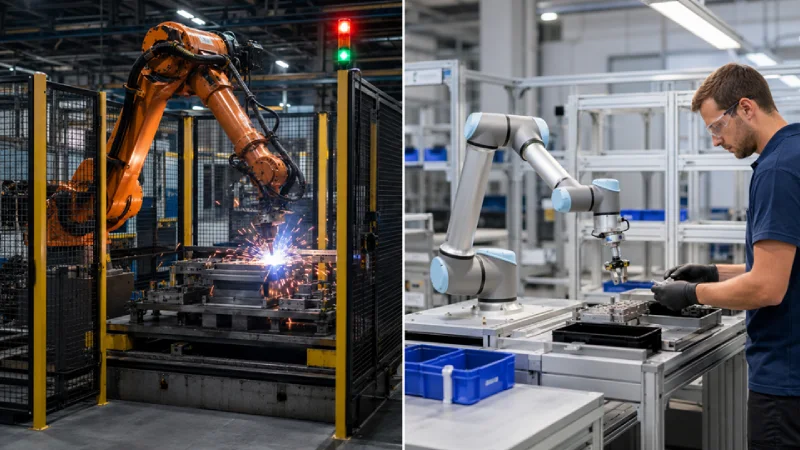
Selecting a traditional industrial robot typically means committing to a fixed production process. Reprogramming or changing its tasks is often time-consuming and requires specialist expertise — making them ideal for consistent, high-volume manufacturing.
Cobots, on the other hand, offer much greater adaptability. They support a wide range of grippers and accessories, allowing operators to quickly redeploy them for new tasks as production needs change.
3. Skilled Labor and Operational Challenges
Installing and calibrating traditional industrial robots involves technical complexities and requires an experienced engineering team.
Cobots overcome many of these challenges with simple, intuitive user interfaces. Their easy programming and setup significantly speed up the integration of industrial automation.
Conclusion: Which Robot Is Right for Your Project?
Understanding the Differences Between Industrial Robots and Collaborative Robots is essential when selecting the right automation solution for your project.
Neither technology is universally superior. Instead, they serve different purposes and complement each other within an industrial automation system.
– Traditional Industrial Robots: The preferred choice for large factories with high-volume production lines that require high speed, heavy-payload handling, and continuous operation.
– Collaborative Robots (Cobots): A well-suited solution for small and medium-sized workshops, space-constrained environments, and production lines that require greater flexibility, frequent changeovers, and high product variety.
No comment