


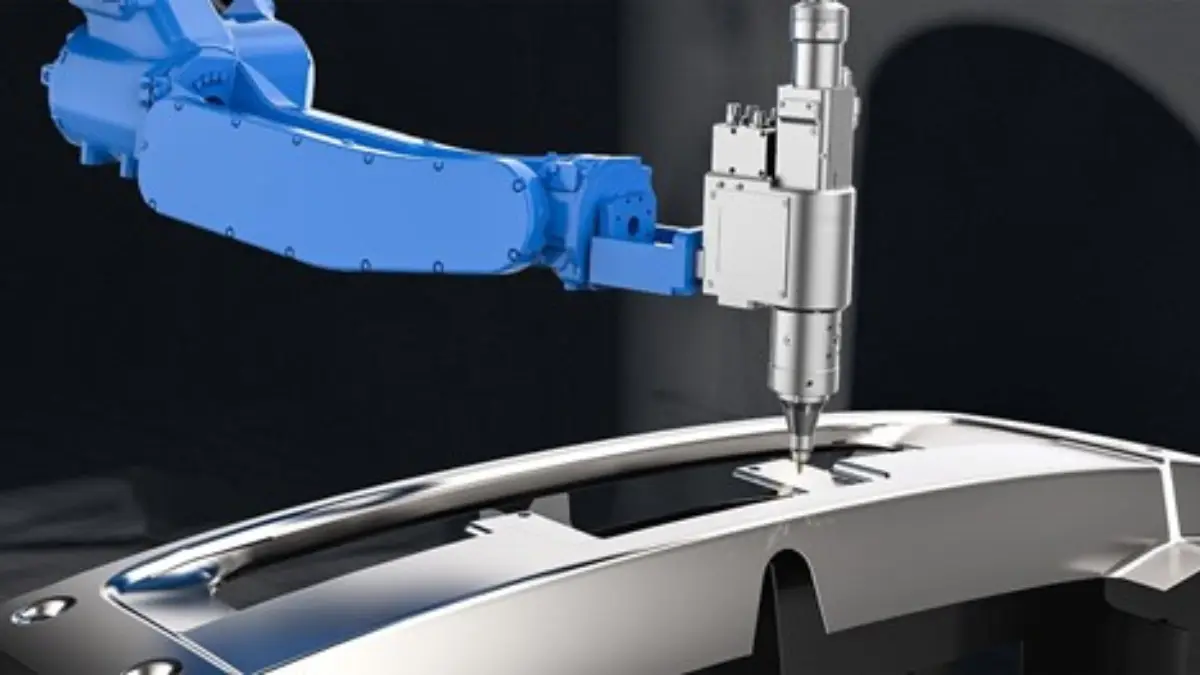
In manufacturing environments where cutting speed, precision, and cut quality matter, Yaskawa laser cutting robots can be a practical solution. These systems deliver precise, repeatable cuts that help reduce material waste and improve production efficiency. That’s why manufacturers across industries, particularly automotive and industrial parts manufacturing, are increasingly adopting robotic laser cutting technology.
What Are Laser Cutting Robots and How Are They Used?
A robotic laser cutting machine is a programmable industrial system that uses a focused laser beam to cut various materials. During the process, laser energy melts or vaporizes material in a localized area. In many applications, an assist gas helps remove molten material from the cutting zone.
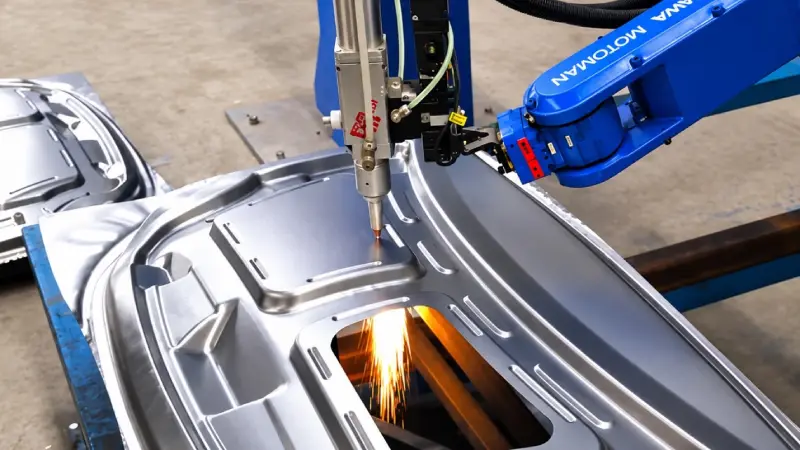
Unlike conventional laser cutting machines, which typically operate within a fixed cutting area, multi-axis industrial robots can follow complex cutting paths and perform three-dimensional cuts.
Common applications include:
Automotive manufacturing: Cutting vehicle body panels and other metal components.
Parts manufacturing: Producing industrial components with complex geometries.
Home appliance manufacturing: Cutting metal parts used in household appliances.
Metal fabrication: Cutting sheet metal, tubes, and metal profiles.
Industrial equipment manufacturing: Fabricating components for machinery and production equipment.
Benefits of Using Laser Cutting Robots
One of the main reasons manufacturers adopt robotic laser cutting systems is to improve production quality while reducing reliance on manual processes. Key benefits include:
Precise cutting: Producing intricate cuts with greater accuracy and fewer errors.
Faster production: Increasing throughput and production capacity on manufacturing lines.
Reduced material waste: Making more efficient use of raw materials.
3D cutting capabilities: Cutting parts with curved surfaces and complex geometries.
High repeatability: Maintaining consistent cut quality across similar parts.
Non-contact cutting: Minimizing mechanical stress on the workpiece during cutting.
Reduced manual labor: Automating a significant portion of the cutting process.
Actual improvements in cutting speed and cost savings depend on factors such as part geometry, material type and thickness, laser power, and production conditions.
Laser Cutting Methods
Robotic laser cutting systems can use different cutting methods depending on the material and required cut quality.
Fusion Cutting
In fusion cutting, the laser beam melts the material, while an assist gas, such as nitrogen, blows the molten material out of the cutting zone. This method is particularly suitable for applications where clean edges and minimal oxidation are important.
Flame Cutting
Flame cutting uses oxygen as an assist gas. The oxygen reacts with the heated metal, generating additional heat that helps sustain the cutting process. This method is primarily used for cutting carbon steel.
Remote Laser Cutting
Remote laser cutting uses a high-intensity laser beam without requiring the cutting nozzle to be positioned close to the workpiece. This technique is mainly used for certain thin materials and specialized industrial applications.
What Is the Difference Between Fiber and CO2 Lasers?
Fiber and CO2 lasers are two widely used technologies in industrial laser cutting systems.
Fiber lasers
These lasers use an optical fiber as the gain medium. They’re widely used in metal fabrication because of their energy efficiency, high cutting speeds on many types of sheet metal, and relatively low maintenance requirements.
CO2 lasers
These lasers use a gas-based gain medium to generate the laser beam. They’re commonly used to cut nonmetallic materials such as wood, acrylic, and certain polymers. CO2 lasers are also used in some metal cutting applications.
Choosing between these technologies depends on the material type and thickness, required cut quality, and operating costs.
Main Components of a Robotic Laser Cutting System
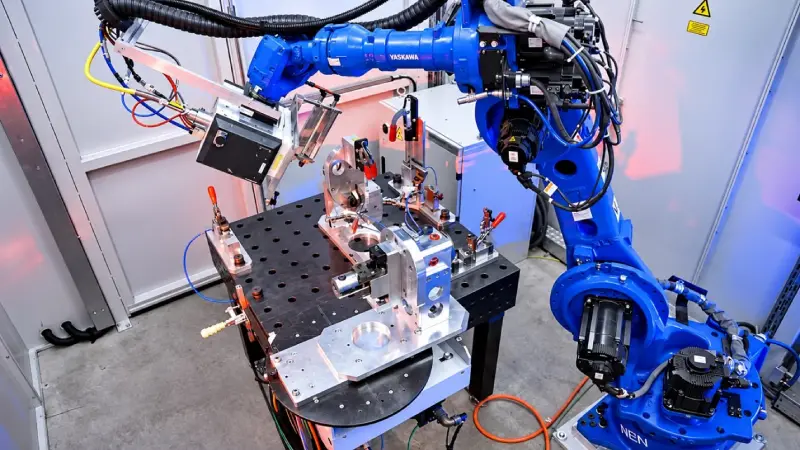
A robotic laser cutting system consists of several key components that work together to maintain cutting accuracy and quality.
| Function | Component |
| Precisely moves the laser cutting head along programmed paths. | Laser cutting robot arm |
| Generates the laser beam required for cutting. | Laser source |
| Direct and focus the laser beam onto the workpiece. | Cutting head and optics |
| Coordinates robot movements and laser cutting parameters. | Control system |
| Regulates equipment temperatures. | Cooling system |
| Helps remove molten material and improve cut quality. | Assist gas system |
| Captures fumes and airborne particles generated during cutting. | Fume extraction and ventilation system |
In addition to these components, safety equipment such as protective enclosures, safety interlocks, and emergency stop systems is essential for safe operation.
Is Investing in a Laser Cutting Robot Cost-Effective?
Despite the initial purchase and installation costs, a robotic laser cutting system can help reduce production expenses over time. Less material waste, faster and more accurate cutting, and the ability to maintain continuous production can all contribute to a positive return on investment (ROI).
However, cost-effectiveness depends on factors such as production volume, part requirements, maintenance costs, and robot utilization. Manufacturers should evaluate their production needs and technical requirements before investing in a robotic laser cutting system.
Buy Yaskawa Laser Cutting Robots from TS Group
If you’re looking to improve cutting precision and speed on your production line, a Yaskawa laser cutting robot may be worth considering.
With direct technical support from Yaskawa, TS Group provides consulting, equipment supply, installation, and commissioning services for robotic laser cutting systems.
Contact our team to discuss your production requirements and find the right robotic cutting solution for your operation.
Phone: +982536148
FAQ
? What Materials Can a Laser Cutting Robot Cut
Depending on the laser source and system configuration, these robots can cut metals such as carbon steel, stainless steel, and aluminum. Some systems can also cut nonmetallic materials.
How Thick Can a Laser Cutting Robot Cut?
The maximum cutting thickness depends on the material, laser power, cutting head, and process parameters. There’s no single thickness range that applies to every robotic laser cutting system.
Are Robotic Laser Cutting Systems Suitable for High-Volume Production?
Yes. Their precision, repeatability, and automation capabilities make them well suited for many high-volume manufacturing applications.
Is Installing a Robotic Laser Cutting System Difficult?
Installation requires proper integration of the robotic arm, laser source, controller, and safety equipment. That’s why installation and commissioning should be handled by qualified specialists.
No comment