


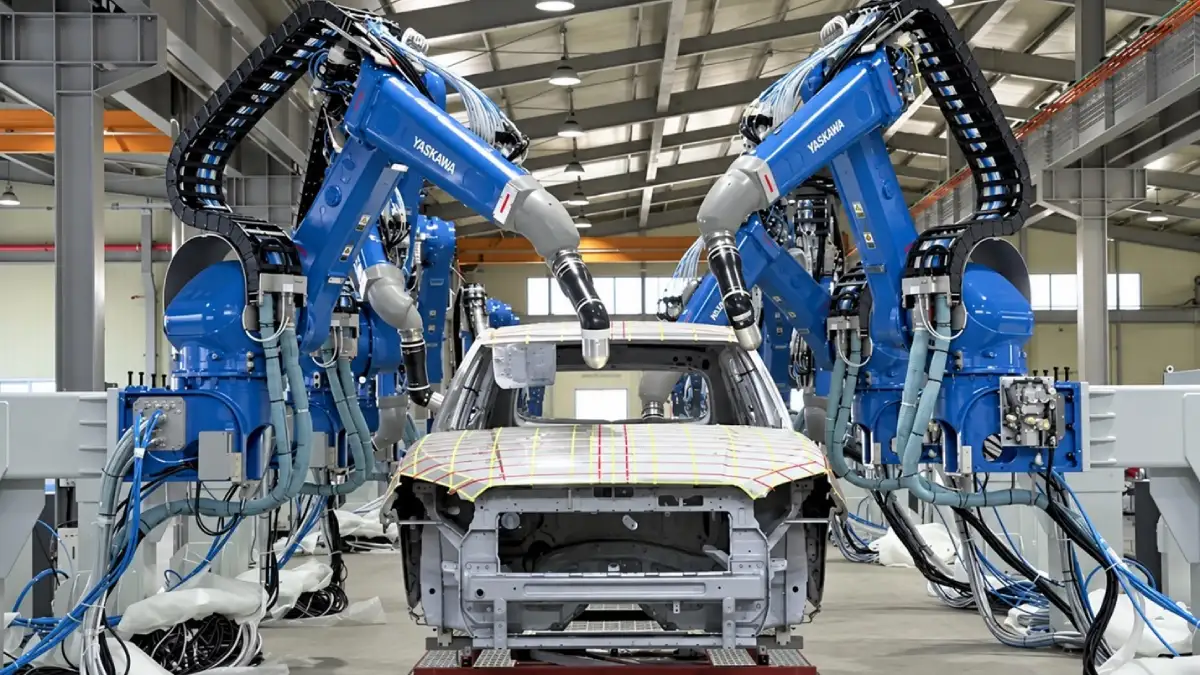
An automated painting robot is an industrial robot designed to apply consistent, precise coatings to surfaces ranging from automotive bodies to small industrial components. These systems follow programmed motion paths to perform spray painting without direct manual intervention.
Industrial painting robots are available in various configurations that differ in payload capacity, number of axes, and reach. This allows manufacturers to select a robotic painting system .matched to the size, shape, and coating requirements of their workpieces
Technical Specifications and Features of Automated Painting Robots
Industrial painting robots typically have six axes of motion, allowing them to reach different areas and angles of a workpiece. Some production lines incorporate a seventh axis for linear robot travel and an eighth axis to rotate the workpiece during painting.
Key features and components of robotic painting systems include:
Degrees of Freedom
The number of axes determines a robot’s ability to reach different areas of a workpiece. An appropriate range of motion allows the robot to maintain the required spray distance and angle, helping achieve consistent coating coverage.
Atomizer
The atomizer breaks liquid paint into fine droplets and applies them to the workpiece surface.
Paint Pump
The paint pump transfers paint from the supply tank to the spray equipment, helping maintain the required flow during application.
Color Changer
A color changer allows the system to switch between different paint colors during production. This feature is particularly useful on manufacturing lines that handle products requiring multiple colors.
Design for Hazardous Environments
Robots intended for spray painting are designed to meet applicable safety requirements for environments where flammable materials may be present. Automated operation reduces the need for personnel to work directly in hazardous painting areas.
Hollow-Arm Design
Some painting robots feature hollow arms that route paint hoses and cables internally. This design reduces their exposure to paint overspray and minimizes interference with the robot’s movements.
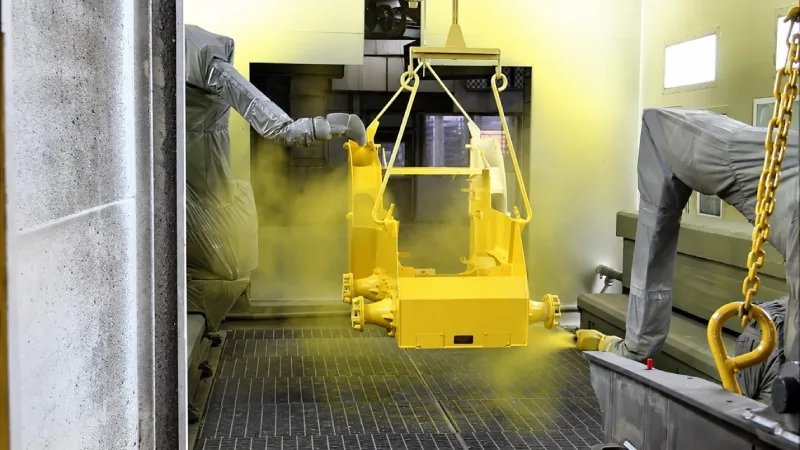
How Are Automated Painting Robots Programmed?
Automated painting robots are typically programmed using a teach pendant, the manufacturer’s proprietary programming language or offline programming software.
During programming, the robot’s motion path, speed, distance from the workpiece, and spray angle are defined to achieve consistent coating coverage across the entire surface.
Offline programming also allows manufacturers to develop and simulate painting paths without interrupting production.
Advantages of Automated Painting Robots
Using automated painting robots in industrial production lines offers several key benefits:
Higher production speed and improved line productivity-
Improved coating quality and uniformity-
Reduced paint consumption and material waste-
Fewer errors associated with manual spray painting-
Improved worker safety in hazardous environments-
Ability to coat complex geometries and hard-to-reach areas-
-Consistent, repeatable coating quality in high-volume production
What Industries Use Automated Painting Robots?
Automated painting robots are used across a wide range of industries due to their precision, speed, and flexibility. In automotive manufacturing, an automotive painting robot can coat vehicle bodies and components. Other applications include painting aerospace equipment, agricultural machinery, household appliances, construction equipment, and metal parts.
Yaskawa Painting Robot Models
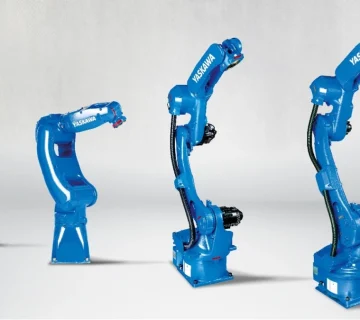
Yaskawa offers its industrial painting robots under the Motoman brand. These robots are designed for precise, repeatable paint application.
Two models from this series are the MPX1150 and MPX1400.
Yaskawa Motoman MPX1150
The MPX1150 is a six-axis painting robot designed to coat both interior and exterior surfaces of industrial components. Its design allows it to follow complex painting paths and achieve uniform coating coverage.
Yaskawa Motoman MPX1400
The MPX1400 is also a six-axis robot designed for industrial painting applications. Its arm design and range of motion allow it to reach different areas of a workpiece and support precise spray application.
Conclusion
Automatic robot painting helps optimize industrial production lines by improving coating precision, speed, and uniformity. These systems reduce material waste and human error while enabling complex painting operations with consistent quality.
When selecting an automated painting robot, key factors to evaluate include workpiece size, paint type, production capacity, robot reach, and operating environment.
No comment