



Industrial cameras powered by artificial intelligence are widely used in manufacturing and production facilities, including robotics, material handling, assembly, and mechanical engineering. Among them, image processing cameras are a specialized type of industrial camera designed to enhance production line automation and support robotic vision systems.
With these smart cameras, industries can go beyond simple image capture — enabling advanced image processing and adjustment of key parameters directly within the production workflow.
If you’d like to explore the features of industrial image processing cameras, stay with us through the rest of this article from TS Group.

Types of Image Processing Cameras
Unlike standard cameras, image processing cameras deliver far higher quality and more reliable outputs. The data they provide makes it possible to achieve better insights into both the qualitative and quantitative aspects of products. Generally, there are two main types of image processing cameras: PC-based cameras and smart cameras.
PC-Based Cameras-
These cameras do not perform image processing internally. Instead, the captured images are sent to a computer, where specialized image processing software analyzes and processes them according to user requirements and pre-programmed instructions.
For this approach, additional tools such as image processing software and custom programming are necessary.
Key Advantage: PC-based image processing cameras offer greater flexibility in processing and can be adapted to meet the needs of a wide variety of users.
Smart Cameras-
Smart cameras are capable of performing image processing directly within the device. Based on predefined settings and processing algorithms, they deliver specific outputs without the need for external programming or software.
This makes them easier to integrate into production lines; however, they are less flexible and may not fully meet the diverse requirements of all users.
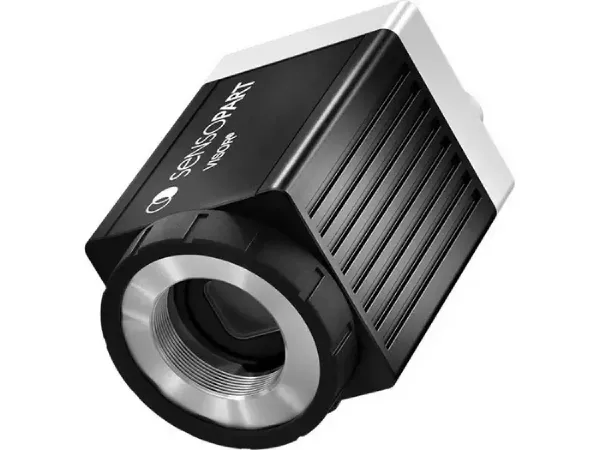
Key Features of Industrial Image Processing Cameras
In industrial cameras, optical signals are converted into electrical signals, ultimately producing a digital image. To process these images, various algorithms, filters, and techniques are applied to enhance machine perception while maintaining and improving production speed and quality.
Designed for Industrial Environments-
Industrial image processing cameras are far more durable than standard cameras. They are built to withstand vibrations, pressure, and high temperatures. Thanks to their robust housing design, they are also resistant to dust and moisture penetration.
Exceptional Imaging Speed-
These cameras can capture images even from weak signals. They are particularly well-suited for photographing fast-moving objects, as they can be configured to adjust shooting speed according to the object’s motion. Unlike conventional cameras, they ensure sharp, high-quality images without losing a single pixel, even at high speeds.
Easy Installation-
Industrial image processing cameras can be mounted using a variety of brackets. With just a few screws, they can be securely installed and in many cases, the brackets can be custom-made if needed..
Adjustable Parameters-
Users can easily modify settings such as image dimensions and brightness through dedicated software, allowing full control and customization.
Compatibility with Multiple Lenses-
These cameras support a wide range of lenses, enabling adjustments to the working distance (the distance between the product and the camera). Depending on the project requirements, you can choose the most suitable lens. However, many machine vision applications can be carried out with standard lenses, without the need for specialized ones.
Superior Image Quality-
Image quality plays a critical role in machine vision projects and programming. The higher the sensor quality, the sharper and cleaner the output will be. Industrial image processing cameras are equipped with powerful sensors capable of delivering high-resolution images with minimal noise, ensuring reliable and precise results.
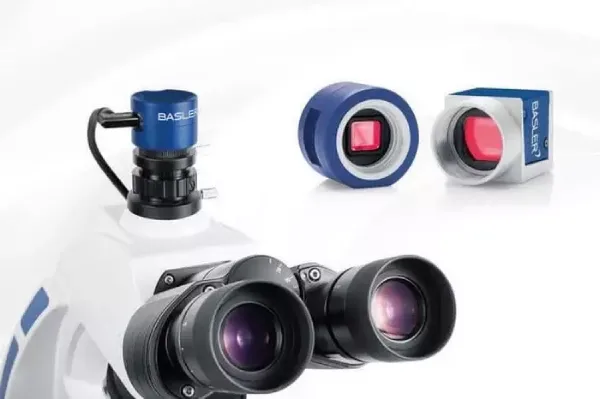
Best Brands of Industrial Image Processing Cameras + Pricing
Two of the best-known industrial image processing camera brands available in Iran are SensoPart and Basler.
-SensoPart cameras are recognized for their exceptional hardware quality as well as their advanced, upgradable software capabilities.
-Basler cameras, on the other hand, enjoy global popularity thanks to their high performance, reliability, and outstanding image quality.
Price of Industrial Image Processing Cameras
The cost of an industrial image processing camera depends on the industry and specific application. Several factors influence the final price, including shutter type, lens, cabling, image resolution, and the quality of the camera’s sensors.
Conclusion
Image processing cameras are widely used in factories and various industries. If you want to improve the quality and efficiency of your projects, investing in one of these cameras is essential.
For example, cameras used in automation and robotics often come with high resolution and are capable of transmitting data to control systems at exceptional speeds. Overall, the precision, quality, and performance of industrial image processing cameras make them an indispensable tool for modern manufacturing.
If you have any questions about industrial image processing cameras, or if you would like to receive pre-purchase consultation, feel free to contact us through the comments section or by calling the number below.
Frequently Asked Questions (FAQ)
What are the applications of image processing cameras?-
Image processing cameras are used across a wide range of industries, including manufacturing, robotics, security, healthcare, automotive, and agriculture. They are commonly applied in tasks such as quality control, defect detection, object tracking, and more.
-How accurate are image processing cameras?
The accuracy of image processing cameras depends on several factors, including camera resolution, image processing algorithms, lighting conditions, and the complexity of the task. High-quality cameras equipped with advanced processing capabilities can achieve very high levels of accuracy.